Científica Dental: abril 2021 (edición exclusiva online)
Caso clínico
Vera Vázquez C, Honrubia Fernández I, De Vega Calleja S, Belliard Tiol V, Ceballos García L. ¿Es la pulpotomía una alternativa al tratamiento de conductos para los dientes con síntomas de pulpitis irreversible? A propósito de un caso. Cient. Dent. 2021; 18; 2; 119-125
¿Es la pulpotomía una alternativa al tratamiento de conductos para los dientes con síntomas de pulpitis irreversible? A propósito de un caso
La pulpotomía total o parcial es una opción terapéutica conservadora para los dientes permanentes con ápice cerrado con signos y síntomas de pulpitis irreversible. Permite preservar los mecanismos de defensa inmune y el potencial regenerativo del tejido pulpar sano remanente, mantiene la integridad estructural del diente y disminuye las complicaciones asociadas al tratamiento de conductos.
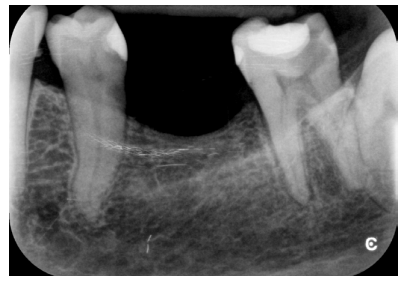
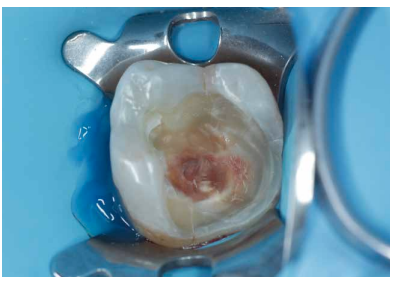
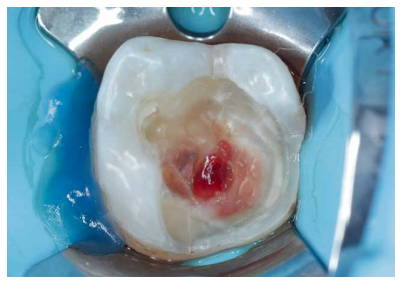
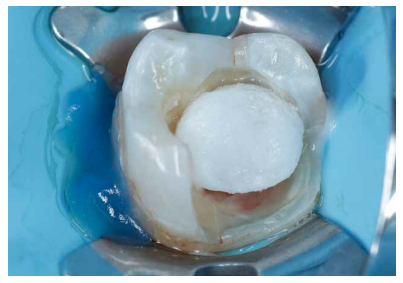
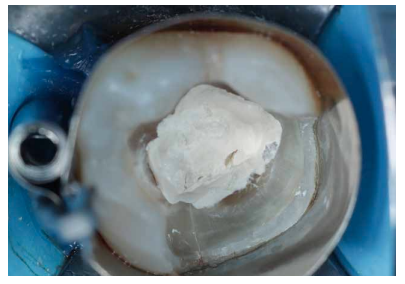
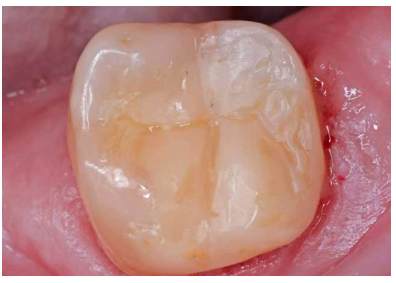
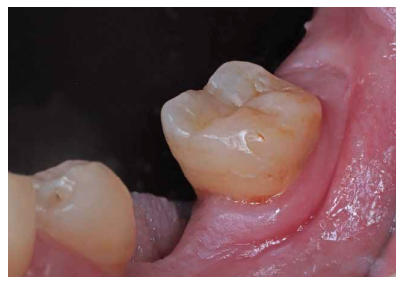
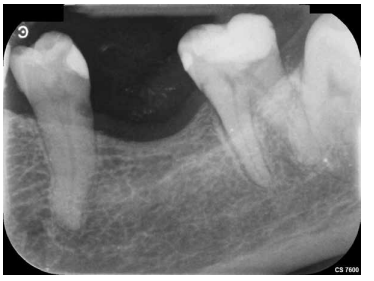
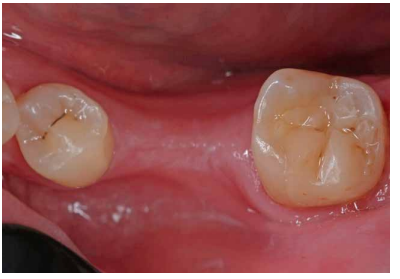
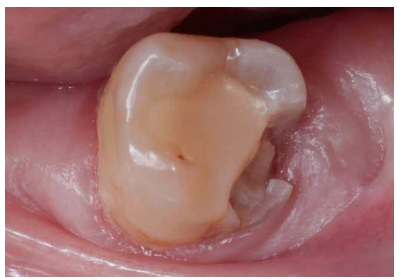
En el presente caso clínico se describe el tratamiento de un 3.7 con diagnóstico de pulpitis irreversible y periodontitis apical sintomática en el que se llevó a cabo una pulpotomía parcial con Biodentine® (Septodont, Sant-Maur-des-Fossés, Francia) durante las prácticas clínicas del Máster de Odontología Restauradora Estética y Endodoncia de la Universidad Rey Juan Carlos. Se presenta el seguimiento a 18 meses.
Complete or partial pulpotomy is a conservative therapeutic option for permanent teeth with closed apex with signs and symptoms of irreversible pulpitis. It preserves the immune defence mechanisms and regenerative potential of the remaining healthy pulp tissue, maintains the structural integrity of the tooth and reduces complications associated with root canal treatment.
This case report describes the treatment of a 3.7 with a diagnosis of irreversible pulpitis and symptomatic apical periodontitis in which a partial pulpotomy was performed with Biodentine® (Septodont, Sant-Maur-des-Fossés, France) during the clinical practice of the Master’s Degree in Aesthetic Restorative Dentistry and Endodontics at the Rey Juan Carlos University. The 18-month follow-up is presented.
La pulpotomía total se define como la remoción de la porción coronal de la pulpa vital preservando la vitalidad de la porción radicular restante, mientras que la pulpotomía parcial o de Cvek consiste en la remoción de una pequeña porción de la pulpa vital coronal preservando el tejido pulpar remanente coronal y radicular1 . Tradicionalmente, la indicación de la pulpotomía parcial se reducía a dientes permanentes con ápice abierto, y la total era un tratamiento restringido a dentición temporal. Sin embargo, con el desarrollo de los materiales biocerámicos y la mejora en el conocimiento de la biología pulpar y su respuesta ante el proceso carioso, la pulpotomía total o, incluso, la parcial, se han convertido en alternativas terapéuticas definitivas frente al tratamiento de conductos en dientes permanentes con ápice cerrado con signos y síntomas de pulpitis irreversible2 .
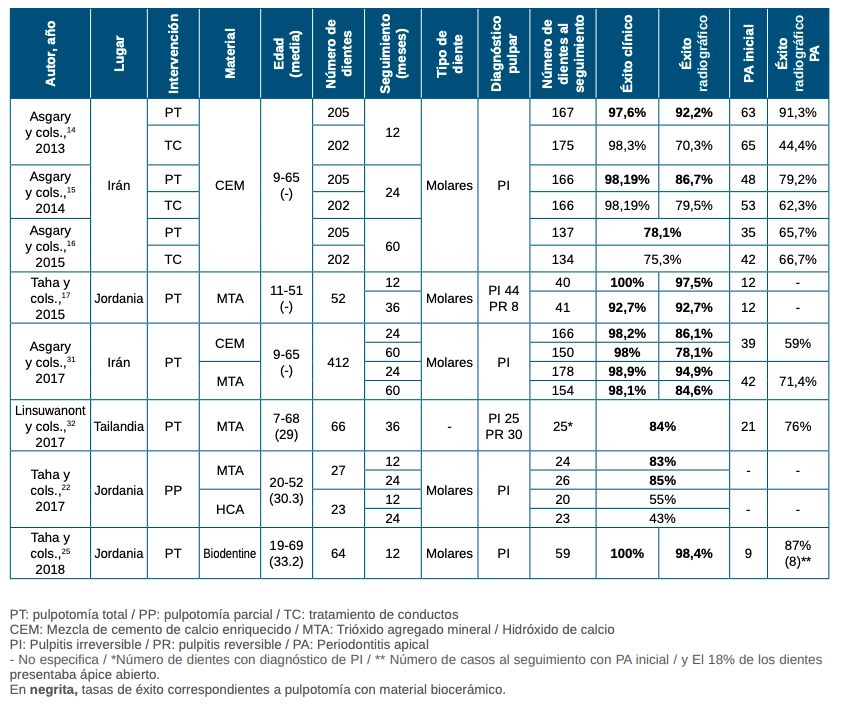
Este tratamiento mínimamente invasivo, permite preservar los mecanismos de defensa inmune y el potencial regenerativo del tejido pulpar sano remanente, manteniendo la integridad estructural del diente y disminuyendo las complicaciones asociadas al tratamiento de conductos. También permite reducir costes y posibles molestias a los pacientes3 . Sin embargo, será fundamental para conseguir el éxito a largo plazo considerar una serie de requisitos: una correcta selección del caso, trabajar en condiciones de asepsia, utilizar un biomaterial adecuado y realizar un correcto sellado coronal2 .
El caso clínico expuesto a continuación describe la realización de una pulpotomía parcial con Biodentine® (Septodont, Sant-Maur-des-Fossés, Francia) en un 3.7 que presentaba pulpitis irreversible y periodontitis apical sintomática. Se presenta la revisión a 18 meses.
American Association of Endodontists. Glossary of Endodontic Terms. AAE 2019; 10th ed.
Taha NA, About I, Sedgley CM, Messer HH. Conservative management of mature permanent teeth with carious pulp exposure. J Endod 2020; 46: 33-41.
Wolters WJ, Duncan HF, Tomson PL y cols. Minimally invasive endodontics: A new diagnostic system for assessing pulpitis and subsequent treatment needs. Int Endod J 2017; 50: 825-9.
Martignon S, Pitts N, Goffin G y cols. CariesCare practice guide: consensus on evidence into practice. Br Dent J 2019; 227: 353–62.
Seltzer S, Bender IB, Ziontz M. The dynamics of pulp inflammation: correlations between diagnostic data and actual histologic findings in the pulp. Oral Surg Oral Med Oral Pathol 1963; 16: 846-71.
Ricucci D, Loghin S, Siqueira J Jr. Correlation between clinical and histologic pulp diagnoses. J Endod 2014; 40: 1932-9.
Ricucci D, Siqueira Jr JF, Li Y, Tay FR. Vital pulp therapy: histopathology and histobacteriology-based guidelines to treat teeth with deep caries and pulp exposure. J Dent 2019; 86: 41-52.
Lin LM, Ricucci D, Saoud TM, Sigurdsson A, Kahler B. Vital pulp therapy of mature permanent teeth with irreversible pulpitis from the perspective of pulp biology. Aust Endod J 2020; 46: 154-66.
Ng YL, Mann V, Rahbaran S, Lewsey J, Gulabivala K. Outcome of primary root canal treatment: systematic review of the literature—part 2. Influence of clinical factors. Int Endod J 2008; 41: 6-31.
Van der Veken D, Curvers F, Fieuws S, Lambrechts P. Prevalence of apical periodontitis and root filled teeth in a Belgian subpopulation found on CBCT images. Int Endod J 2017; 50: 317-29.
Crespo-Gallardo I, Hay-Levytska O, Martín-González J, Jiménez-Sánchez MC, Sánchez-Domínguez B, SeguraEgea JJ. Criteria and treatment decisions in the management of deep caries lesions: Is there endodontic overtreatment? J Clin Exp Dent 2018; 10: 751-60.
Koopaeei MM, Inglehart MR, McDonald N, Fontana M. General dentists’, pediatric dentists’, and endodontists’ diagnostic assessment and treatment strategies for deep carious lesions. A comparative analysis. J Am Dent Assoc 2017; 148: 64-74.
Stangvaltaite L, Kundzina R, Eriksen HM, Kerosuo E. Treatment preferences of deep carious lesions in mature teeth: questionnaire study among dentists in Northern Norway. Acta Odontol Scand 2013; 71: 1532-7.
Asgary S, Eghbal MJ, Ghoddusi J, Yazdani S. One-year results of vital pulp therapy in permanent molars with irreversible pulpitis: an ongoing multicenter, randomized, non-inferiority clinical trial. Clin Oral Investig 2013; 17: 431-9.
Asgary S, Eghbal MJ, Ghoddusi J. Two-year results of vital pulp therapy in permanent molars with irreversible pulpitis: an ongoing multicenter randomized clinical trial. Clin Oral Investig 2014; 18: 635-41.
Asgary S, Eghbal MJ, Fazlyab M, Baghban AA, Ghoddusi J. Five- year results of vital pulp therapy in permanent molars with irreversible pulpitis: a noninferiority multicenter randomized clinical trial. Clin Oral Investig 2014; 19: 335-41.
Taha NA, Ahmad MB, Ghanim A. Assessment of mineral trioxide aggregate pulpotomy in mature permanent teeth with carious exposures. Int Endod J 2015; 50: 117-25.
Cushley S, Duncan HF, Lappin MJ y cols. Pulpotomy for mature carious teeth with symptoms of irreversible pulpitis: a systematic review. J Dent 2019; 88: 103- 58.
Li Y, Sui B, Dahl C y cols. Pulpotomy for carious pulp exposures in permanent teeth: a systematic review and metaanalysis. J Dent 2019; 84: 1-8.
Aguilar P, Linsuwanont P. Vital pulp therapy in vital permanent teeth with cariously exposed pulp: a systematic review. J Endod 2011; 37: 581-7.
Kundzina R, Stangvaltaite L, Eriksen HM, Kerosuo E. Capping carious exposures in adults: a randomized controlled trial investigating mineral trioxide aggregate versus calcium hydroxide. Int Endod J 2017; 50: 924-32.
Taha NA, Khazali MA. Partial pulpotomy in mature permanent teeth with clinical signs indicative of irreversible pulpitis: a randomized clinical trial. J Endod 2017; 43: 1417-21.
Meschi N, Patel B, Ruparel NB. Material Pulp Cells and Tissue Interactions. J End 2020; 46: 150-60.
Awawdeh L, Al-Qudah A, Hamouri H, Chakra RJ. Outcomes of Vital Pulp Therapy Using Mineral Trioxide Aggregate or Biodentine: A Prospective Randomized Clinical Trial. J Endod 2018; 44: 1603-9.
Taha NA, Abdelkhader SZ. Outcome of full pulpotomy using Biodentine in adult patients with symptoms indicative of irreversible pulpitis. Int Endod J 2018; 51: 819-28.
Tan SY, Yu VSH, Lim KC y cols. Longterm pulpal and restorative outcomes of pulpotomy in mature permanent teeth. J Endod 2020; 46: 383-90.
Bai J, Xu T, Ji AP, Sun W, Huang MW. Impact of COVID-19 on oral emergency services. Int Dent J 2020;10. doi:10.1111/ idj.12603.
Grossman S, Sandhu P, Sproat C, Patel V. Provision of dental services at a single institution in the UK’s epicentre during the COVID-19 pandemic. Br Dent J 2020; 228: 964-70.
Yu J, Zhang T, Zhao D, Haapasalo M, Shen Y. Characteristics of endodontic emergencies during coronavirus disease 2019 outbreak in Wuhan. J Endod 2020; 46: 730-5.
Ates AA, AlOmari T, Bhardwaj A, Tabnjh A, Gambarini G. Differences in endodontic emergency management by endodontists and general dental practitioners in COVID-19 times. Braz Oral Res 2020; 34: e122.
Asgary S, Eghbal MJ, Bagheban AA. Long-term outcomes of pulpotomy in permanent teeth with irreversible pulpitis: a multi-center randomized controlled trial. Am J Dent 2017; 30: 151-5.
Linsuwanont P, Wimonsutthikul K, Pothimoke U, Santiwong B. Treatment outcomes of mineral trioxide aggregate pulpotomy in vital permanent teeth with carious pulp exposure: the retrospective study. J Endod 2017; 43: 225-30.